Services

Snap-in Implant Dentures In Magnolia, TX

Get in touch with us for a consultation today

What Are Snap-In Implant Dentures?

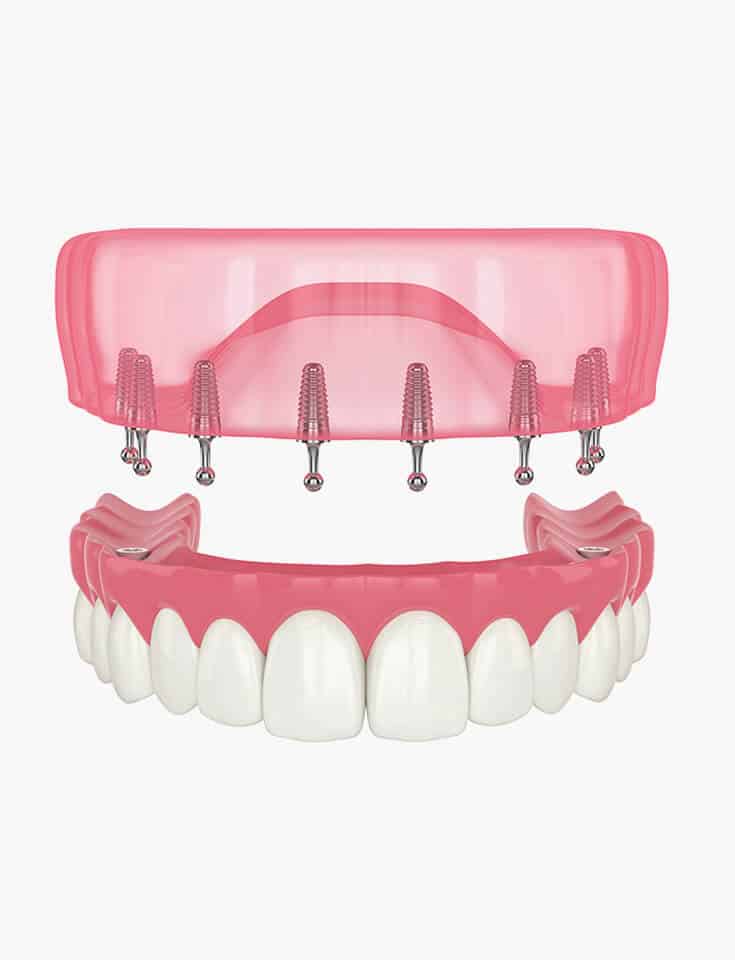
Snap-In Implant Dentures are dentures equipped with special fittings that enable them to attach (snap-in) to the dental implants inserted by your doctor.

Securing your dentures with dental implants provides you with the following benefits:
  • Enjoy more of your favorite foods
    By securing your denture with dental implants, patients are able to chew with much greater power and confidence.
  • Non-removable
    Doesn’t come in and out of the mouth like a denture.
  • Smile and laugh
    without worry of your dentures falling out
  • Live more comfortably
    Dentures not moving as much, less rubbing and chafing
  • Receive better nutrition
    Chew up food better
  • Requires the least amount of bone
    Great for people who have been told they don’t have enough bone for implants.
  • Reduce bone loss
    While a person may continue to lose bone after having their natural teeth removed, dental implants provide stimulation down into the jaw which encourages the body to continue to produce bone.
  • Reduce or eliminate gagging
    In some cases a portion of the palate can be removed exposing the roof of the mouth. This reduces or eliminates gagging caused by your denture.
  • Increased comfort
    Dental implants help reduce or eliminate the irritation caused by movement of the dentures.
  • Taste your food better
    Some patients with implants can have part of their upper denture’s palate removed. This allows you to taste your food better.
Snap-In Implant Dentures vs. Traditional Dentures

While traditional dentures are often aesthetically pleasing and represent a cost-effective means of replacing damaged or missing teeth, they can fall short in terms of overall functionality, stability, and chewing capability.

Shortfalls of traditional (non-implant) dentures:

  • Limited Chewing Power:
    Movement of the lower denture results in minimal chewing power, typically only 10-20% of what individuals had with natural teeth. The constant pushing and pulling by the tongue and cheeks keep the lower denture unstable.
  • Speech Difficulty:
    Speaking can be challenging due to the movement of the lower denture.
  • Embarrassment:
    Individuals may feel embarrassed about eating in the presence of others, laughing loudly, or engaging in confident conversation due to the fear of dentures becoming loose and falling out.
  • Discomfort:
    Traditional dentures, especially lower ones, tend to move around, causing irritation and discomfort by rubbing and chafing against the gums.
  • Poor Nutrition:
    The loss of chewing power may lead to an inability to eat a balanced diet and chew food adequately for proper digestion.
  • Bone Loss:
    After tooth removal, significant bone loss occurs and continues throughout a person’s life, making traditional dentures increasingly challenging to wear over time.
  • Gagging:
    The traditional upper denture covers the roof of the mouth for suction and stability, but this can induce gagging in many individuals. Trimming the denture to alleviate gagging compromises stability and natural suction.


Snap-In Implant Dentures significantly address and improve these issues.

Am I a Candidate?

The majority of patients qualify for the procedure! A brief consultation is all it takes to confirm eligibility. During this appointment, a 3-dimensional scan of your jawbones will be taken, the doctor will conduct an oral examination of your mouth, and a detailed discussion of your medical history will be carried out.
How Many Implants Will I Need?
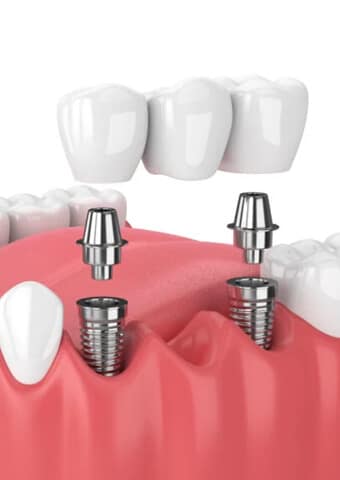
  • Upper
    An upper implant denture necessitates a minimum of 4 implants.
  • Lower
    A lower implant denture necessitates a minimum of 2 implants, though 3 or 4 implants usually result in a notable enhancement in retention and stability.
Snap-In Implant Dentures Procedure Timeline

The process typically takes around 6 months from start to finish.

  1. Procedure:
    After the removal of any remaining teeth and completion of any other necessary oral surgery procedures, the implants are placed into the jawbone. Following this, the implants are typically not visible, remaining untouched in your jaw for a minimum of 4 months to facilitate osseointegration, where your bone bonds with them.
  2. Post-Op:
    A brief post-operative appointment is scheduled for the day after your procedure. During this appointment, we assess your mouth, ensure the optimal comfort of any dentures, and address any questions you may have.
  3. Soft Liners / Soft Re-Fittings:
    Soft liners, periodically placed in your denture as you heal, fill in the spaces between your gums and dentures created during the healing process. They provide cushioning to your gums, enhancing the fit and feel of your dentures.
  4. Uncovery:
    This involves a smaller surgical procedure where we expose the implants and install small healing abutments atop them to shape your gum tissue appropriately, preparing you for the completion of your snap-in dentures.
  5. Attachment of Implants to Dentures:
    We replace the healing abutments with your denture abutments and perform the necessary steps to connect your dentures to your implants. While this step is typically completed in a day, there might be instances where it takes slightly longer.
Snap-In Implant Dentures Cost

Our pricing stands out as the most competitive in the region, delivering the finest final results. This is made possible by our highly skilled dentist who oversees the entire procedure from start to finish, working in tandem with a proficient in-house dental lab technician. The duo has seamlessly executed this procedure together countless times, ensuring expertise and efficiency.
Frequently Asked Questions

Get answers to common questions from new patients.

Are implant dentures removable?

Yes. Having removable implant dentures makes cleaning them very convenient. Just take them out; clean the denture(s), your gums, and implants; and snap them back in.

Yes! They are much more secure than dentures alone, and we are able to increase the retention with stronger inserts if you prefer.

Typically 1 to 2 times per year. This will depend on how many implants you have, how strong your bite is, how frequently you take your dentures in and out, and several other factors.

WARNING: PLEASE DO NOT BITE YOUR DENTURES INTO PLACE ON YOUR IMPLANTS! This will wear out your inserts significantly faster. Only place your implant dentures in by hand.

Significant bleeding will have stopped before you leave the clinic, however, expect to have some slight bleeding (oozing) for 1-3 days after the procedure. In addition, you will most likely notice increased salivation when we first put your denture(s) in. When this increased saliva mixes with a little blood, it can look like a lot of blood. If heavy bleeding continues, please call the office.

An old home remedy that still works really well to help clotting and stop bleeding is the use of tea bags. Just get a regular tea bag, get it damp, squeeze out the excess water, place it on your extraction site or sites, and the bags will help you clot. Multiple tea bags can be used if needed. Replace the tea bags if they get saturated with blood. This process can be repeated as many times as you need.